For more information on our research activities, please get in touch!
|
|
Social communication in Atlantic Puffins
Atlantic puffins have a highly characteristic colourful bill patterned by ridges and grooves. Mutual mate choice has traditionally been used to explain the existence of such traits but the life history of puffins arguably limits the potential for strong sexual selection (e.g., lifetime pair bonds, no extra-pair paternity). Why, then, are puffin bills colourful?! Our lab is studying social networks in these birds, and determining if variation in the puffin bills can facilitate social interactions through individual recognition. |
|
Triplefin - Scorpionfish prey-predator interactions
Triplefin blennies use modifications of their irides to improve their ability to detect both potential prey and predators. These active photolocation mechanisms have only recently been described and could prove to be a new frontier in the study of active sensing. These projects are conducted through ongoing collaboration with the Institute for Evolution and Ecology at the University of Tuebingen, led by Nico Michiels. |
|
|
Gaze pattern during formation of search image
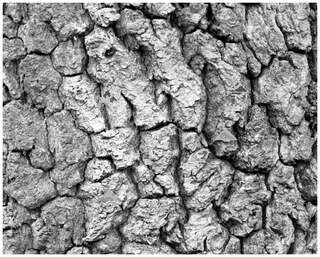
With collaborators Jon Fawcett (MUN Psychology) and Jolyon Troscianko (Exeter Biosciences) we are using eye-tracking software to determine how visual search patterns change during the acquisition of a search image |
|
Visual signals in birds
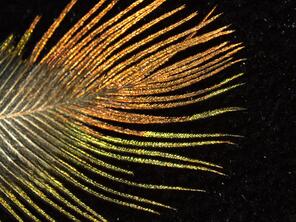
We are currently working on understanding the evolution of iridescent feather traits in Galliformes and Trogoniformes |
|